Friday, October 1, 2010

The Philosophy of an Omelet

I love breakfast food and I will eat it at any time of day. I find it to be friendly, comforting, and energizing. However, a lot of times making hot breakfast food (e.g. omelets, waffles, pancakes, french toast, etc) can be a daunting task first thing in the morning. So for breakfast I usually have some whole-grain toast (with almond butter, brie, or butter) and half a cup of vanilla yogurt to ensure that I have protein and nutrient-rich carbohydrates to start my day. To ensure energy for studying or to replace energy after the gym, I make myself an egg-white omelet or scramble for lunch almost every day.

When I first started eating omelets, I started eating cheesy omelets using whole eggs and cheddar cheese (and nothing else). I ate these for years and they were a heavy and highly caloric. When I changed over to eating egg whites while trying to cut down my daily calorie intake, I found that plain scrambled egg-whites were too bland. So I started to add cheese to it and make egg white omelets and scrambles. They were great. A few weeks later, Cerinthus and I went to the omelet bar that was open some mornings at the school cafeteria. he ordered an omelet with bell peppers and green onions. I took one bite of his omelet and realized how much I liked them. So, I added green onions to my own omelets that I made and home and found them fabulous.

The omelets I make are light and airy. They pack a large protein punch-- about 15g or so per omelet-- but they taste delicate. I hardly ever eat whole eggs anymore because I find them to be heavy, although I understand that there are good nutrients (as well as fat) contained in egg yokes. I am sure that this is not proper foodie style, but I love the balance of tastes between the sharp cheese, the spicy cheese, and the onion that my omelets afford because these flavors are not overpowered by the heaviness of whole eggs. This provides a delicacy that I find lovely and refreshing, especially on a summer day.

My Favorite (low calorie) Omelet
1-2 green onions, chopped finely
0.5 oz jalapeno or habanero jack cheese
0.3 oz sharp cheddar (this ratio can be switched or changed to tast)
3 egg whites
tiny bit of grapeseed oil for the pan

Directions
  1. Put a little grapeseed oil onto a paper towel and wipe it over the inside of a nonstick pan. Heat the pan at medium. Beat or whip egg-whites so they incorporate air and will provide a fluffier omelet.
  2. When the pan is hot enough that the egg white will begin to whiten as it touches the pan, but not so hot that it bubbles or sputters, add in the egg white.
  3. Before the egg white begins to cook, add the green onions in. This was a trick that one of the cooks at my school cafeteria taught me-- this allows the green onions to evenly distribute through the egg white which means they are in every bite and the egg-white has green spots, which looks pretty cool. Stir the egg-white to more evenly distribute the onion.
  4. Use a heat-resistant scraper to loosen the egg-white from the sides in preparation for flipping. When the egg-white begins to bubble, do a final loosening with the scraper. Rock the pan a little to ensure that the egg-white moves as a solid mass. Then flip (good luck)!
  5. After flipping, sprinkle the cheese over the egg-white and let it sit for about 20 seconds. Then fold the egg white over and ensure each side is cooked through.
  6. Serve hot! (and perhaps with toast)

These omelets can also hold a number of other vegetables, depending upon your taste. I find bell peppers, sweet peppers, and broccoli to be best.

The Joys and Pitfalls of Self-Directed Education

In May, I graduated from college with my BA in Classics. I decided to strike out on my own for a year (and looking increasingly like two years) in order to solidify my education, gain some work and teaching experience, and choose my path forward into academia. Exploring education on my own, and teaching my own classes, continues to provide me with a new perspectives on the benefits and drawbacks to institutionalized learning and also on educational resources.

Here are some of the great things I have found while learning on my own:
  • Skype is awesome. 
    • Although Cerinthus is away, I can still ask him questions and get answers from the experts he has access to in Greece and Italy (see Cerinthus Reports on both Fragments of Sulpicia and Platonic Psychology).
    • Propertius II and I work on Horace together over skype as well and we can share screen, send information, and interact.
    • On a broader educational level, Sugata Mitra's work which he explained in his TED Talk (which I highly recommend if you have not seen it) employs Skype through a method known as the Granny Cloud. This employs British grandmothers to watch over and encourage students using internet resources for the purpose of education and has proved to be an effective tool
  • I can read and research whatever I want, which leads me to exciting new areas of research.
    • As I was doing some more in-depth research on grave monuments to solidify work on my thesis, I stumbled across Ian Morris' Burial and Ancient Society: The Rise of the Greek City-State (which can be downloaded for free if you have access to ACLS and some minimal computer skills). The book is awesome so far, but I realized I have almost no background whatsoever in archaeology. This lead me to find another book, An Archaeology of Greece, by Anthony Snodgrass, which is currently public from University of California Press.
  • There are a number of websites and blogs that provide immense amounts of information and there are even more under construction.
    • The UC Berkeley Webcast website has some fabulous classes by incredible professors that one can listen to via podcast. They also have campus events and speakers. A truly phenomenal resource.
    • I have a whole list of classics resources under "Interesting Links" on the left-hand side of Platonic Psychology.
    • Wikimedia Commons provides images for people to use. I employed these to find examples of for myself and then to provide examples to me readers for Proto-Corinthian pottery.
    • There are also some unfinished resources which may still be valuable:
      • Wikiversity (and its Classic Department) attempts to provide class outlines and resources to individuals who want to learn from the teachers who are willing to make them. Wikiversity says on its main page: "Wikiversity is a Wikimedia Foundation project devoted to learning resources, learning projects, and research for use in all levels, types, and styles of education from pre-school to university, including professional training and informal learning. We invite teachers, students, and researchers to join us in creating open educational resources and collaborative learning communities."
      • The Homer Multitext is an incredible resource put together by the Center for Hellenic Studies, which, according to the website, "seeks to present the textual transmission of the Homeric Iliad and Odyssey in a historical framework. Such a framework is needed to account for the full reality of a complex medium of oral performance that underwent many changes over a long period of time. These changes, as reflected in the many texts of Homer, need to be understood in their many different historical contexts. The Homer Multitext provides ways to view these contexts both synchronically and diachronically." This is an incredible resource for Homer scholars.
  • Everything you do is directed toward your needs (or the needs of those with whom you study).
    • Something I really need to work on is my Greek and Latin reading fluidity and pronunciation, as well as building my vocabulary. Although all of my classes in college attempted to do a little of this, none of them focused on it. After ascertaining from those who I considered experts in each area what resources I should be using, I have been able to at least begin to work on these areas.
    • Furthermore, I can use old syllabi to review precisely those assignments I did not quite understand (or wanted to look into further).
 Burial and Ancient Society: The Rise of the Greek City-State An Archaeology of Greece: The Present State and Future Scope of a Discipline (Sather Classical Lectures) Vox Graeca: The Pronunciation of Classical Greek
However, there are also inevitable problems with learning on my own:
  • There are no teachers and no deadlines. I have to be ready to set firm deadlines as well as find resources among friends, books, and the internet to provide instruction. It is incredibly easy to slip up or procrastinate. I have slipped up a number of times, but I remind myself that cheating only hurts me, which motivates me to work harder.
  • I have to create my own evidence of my efforts. Unforuntately, I cannot get a degree from Sulpicia University and I am not graded in my endeavors, even when I use resources like UC Berkeley Webcast, so I have to demonstrate my knowledge effective and produce something. Blogging has been one thing that provides a certain amount of accountability and shows some amount of my effort, but I need to also work on getting something published so that I can show it to a graduate school.
  • There are no school facilities. Although I can drive to my local university library to check out books or search for information (and I do), I do not have the same incredible facilities that I had in college, e.g. I cannot use an inter-library loan program nor do I have campus visiting lecturers nor easily-accessible students and professors in other disciplines. However, Skype, email, and access to my parents has helped ameliorate this, because I can contact scholars and peers as well as having greater access to cars and trips to concerts, lectures, conferences, museums, and even out of town to find wonderful opportunities.

Wednesday, September 29, 2010

Jill Sobule's Pink Pearl and Study Music

One of the band websites I designed is, in its music review section, featuring one of my very favorite albums. Jill Sobule's Pink Pearl [1] is a fabulous pop album that I often listen to when I'm studying. Check out the review on Don't Tell Betsy!'s website. Jill's website is also really adorable.

Some of my other favorite study albums are Cherry Ghost Thirst for Romance, K.T. Tunstall's Eye to the Telescope (although I actually like the song-ordering better on the original version), The Jayhawks' Smile and Rainy Day Music, and Steadman's Revive.

Pink Pearl Thirst For Romance Eye To The Telescope Smile Rainy Day Music Revive

As a word of warning, I have what I have been told is a strange set of criteria for study music. I cannot study to music without lyrics. The problem with instrumentals is that I listen too them too much, and get distracted by my studying. This is especially problematic with classical music [2] because I find it emotionally gripping and absorbing. All of the pop albums that I listen to are great albums and have wonderfully engrossing music, in my opinion, but they all have a quality which allows my brain to put them into the background when I need to and focus on my work. I guess it is because I find all of these albums comforting.

Some interesting things:
  • Jill Sobule writes witty and fabulous lyrics. She also is an incredible live performer. I loved her guitar so much, that my grandmother bought me one (it's a vagabond traveling guitar). You can see it in the video of "I Kissed a Girl" on the Don't Tell Betsy!'s website.
  • Cherry Ghost writes songs that contain incredibly vivid and fascinating images. "Dead Man's Suit" and "People Help the People" are good examples. Being a classicist and a Time Team (UK) fan, I also love "Here Come the Romans." I have this album downloaded onto my Kindle (under Menu, under Experimental there is a rudimentary MP3 player)
  • The Jayhawks are awesome. One of my favorite concerts that I ever went to was The Thorns opening for the Jayhawks. They did three songs together for the encore.
  • I saw Steadman open for Feeder, one of my favorite bands. I thought that Steatman were awesome and bought their album. Steadman employs fascinating concepts in their lyrics, especially in the allusions in "No Big Deal." I also absolutely love "Come Alive."
Endnotes
  1.  Most of the links up there are Amazon links, although the names of the bands are linked to iTunes. If you want to check out the albums on iTunes the links are here: Pink Pearl, Thirst for Romance, Eye to the Telescope, Smile, Rainy Day Music, and Revive. Also, check out The Thorns.
  2. By "classical music" I mean the broader, typical sense of the term, rather than only music from the classical era. My elementary school music teacher would want me to make that distinction, were she to read this.

Tuesday, September 28, 2010

Pew Forum Study on Religious Knowledge

There seems to be a lot of news going around recently about the Pew Forum's Study on Religious Knowledge. The Pew Forum put together a 15 question quiz, which you can take by clicking here, on basic religious knowledge. The original survey was done by phone to a set of randomly selected adults and contained 32 questions. This New York Times article discusses the results.

I wanted to look at the full results of the study but my browser keeps telling me that it cannot access it. Maybe the site is down from too many hits.

Although my primary study of religion has been studying Ancient Greek and Ancient Roman religions (and even in these two disciplines I am far from knowledgeable), I managed a 13/15 on the quiz (87% correct, and in the 97th percentile of participants). I missed one out of lack of knowledge, and one because I second-guessed my original answer. The breakdown of scores by gender, religious affiliation, race, church/temple/mosque attendance, and education is fairly fascinating.

I have written a little bit on Greek Religion, and especially it's use in the work of specific tragedians, on Platonic Psychology. My main source of knowledge on Greek Religion comes from my early education in the fifth and ninth grades on Greek mythology, my own reading and supposition, and almost every one of my classics courses in college. I would also recommend Walter Burkert's Greek Religion, which was a fabulous resource, although it is less detailed than I would like.
Greek Religion: Archaic and Classical (Ancient World)
One of the things I am still looking for is a detailed explanation of Greek bird omens and their interpretation. If anyone has a good source, post a comment or send me an email (sulpicia3 [at] hotmail [dot] com).

Monday, September 27, 2010

Polytonic Unicode Greek for Windows and a Question for Computer Geeks

I posted this on Platonic Psychology, but I wanted to try to reach the widest audience of people to find out if anyone could help me with this computer issue.

One of the things that I have been aiming at for quite a while now is being able to easily write polytonic Greek with relative ease on the computer. I have difficulty with Macs so the computers to which I have access are a Windows XP machine and a Windows 7 machine. I finally found two sites that have helped me out: this one which allowed me to download the Unicode Greek Keyboard for Microsoft and this one which helped me change my settings so I could toggle between the two [1] .

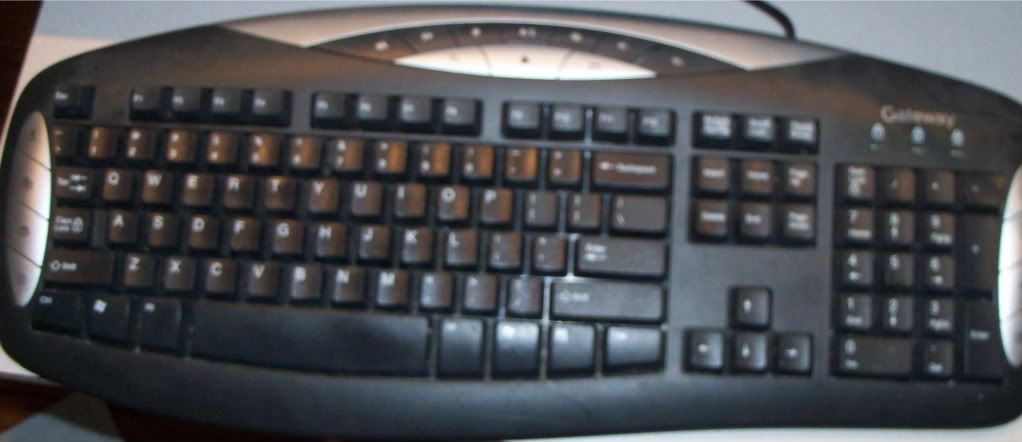
I can now toggle beautifully: αβγδεζηθικμνξοπρστυφχψω. However, I can only get one of the accents to work ά. According to the website, I need a dead key to make this work (i.e. a key that will postpone the action on the keyboard so it can be modified by a further keystroke). I am supplying a picture of my keyboard. Does anyone know what my dead key should be or have any ideas? Comment or email me at sulpicia3@hotmail.com. Thanks!

keyboard
Sorry for it being blurry. The silver keys are just quick-function buttons such as calculator.


Endnotes
  1. An easier way to do this than the website recommends (for XP and AFTER you have downloaded the Unicode Greek Keyboard) is to go to Control Panel. Double click on Regional and Language Options. Click on the Languages Tab. Click on the Details button. Click on the Key Settings button. Click on the Switch between input languages line of text. Click on the Change Key Sequence button and then select one of the two key sequences. Click on the Ok buttons all the way through to save your changes.

It was terrifying enough applying to grad school before Professor Michael Pakaluk put his nose in it...

Word of warning: this post begins with a lengthy personal anecdote, you can skip to the * if you want to get to the point more quickly.
Plato Complete Works
I took my first ancient philosophy class in July 2009. I was expecting to hate it, given what I deemed was the gross analytical bent in academic philosophy in the United States characterized by an examination of the logic and structure of linguistic utterance to the point of nonsens. As it turns out, although I may have been correct about philosophy at large (I have no way of knowing), I was surely wrong about this class.

The class was, in fact, analytic in its approach. However, the questions asked were lively and fascinating. We read Plato's Meno and Theatetus (with a recommendation to read Burnyeat's introduction) in small pieces and had a 2h30 discussion format in which to discuss in-depth questions on each reading. It was magnificent. And the PhD candidate running the class was incredible (and was an alumnus from my college!)

The questions, designed by the Grad student running the seminar, asked us to explore the logic behind each set of claims and exchanges as well as the reason for each story, tangent, or explanation made by one of the characters. Instead of looking at the rhretorical, historical, grammatical, and cultural meanings of the passages, the close analysis was on the logical through lines of the narrative in each particular speech or interchange. Although most of the class had a background in philosophy (many were on the cusp of graduating in philosophy) all of them seemed genuinely interested in the classical contexts of specific statements if it provided a means by which to understand the logic or the rhetorical weight of a statement (the lack of context and focus solely on language was something that had given me a distaste for analytic philosophy in my few encounters with  it). When I finished the class, I knew I wanted to go into Ancient Philosophy. The dissection at such a minute level was far more illuminating than I expected. However, I wanted to approach it from a more classical bent-- mixing what I thought was admirable about the approach to that wonderful class used in conjunction with what I found incredible about a work like Thomas Szlezak's Reading Plato [1].

Going into my senior year and without proper prerequisites, I could not suddenly jump into a philosophy-heavy program. Even so, I was not dissuaded. I still would like to work on classical philosophy in graduate school, although, perhaps move into it through a classics department.

*One of the things that the PhD candidate who lead my class showed me was Philosophical Gourmet Report: Ancient Philosophy. Although he had a great interest in the subject, ancient philosophy was not his primary field. He warned me, of course, not to take the list at face value, and helped me check through faculty lists (to survey names and specialties of the professors at each institution. Using a combination of hearsay, investigation into the faculty of a number of schools, the Classical Journal's List of PhD programs in Classical Studies (to which Propertius II directed me), Philosophical Gourmet Report: Ancient Philosophy and I have made a preliminary list. Then, in my internet wanderings I discovered this article, evaluated the Philosophical Gourmet Report: Ancient Philosophy.

The article on a blog called Certain Doubts describes a posting by Professor Michael Pakaluk on his blog Dissoi Blogoi acerbically criticizing Philosophical Gourmet Report: Ancient Philosophy (points 3-6) and excoriating any of those who choose to employ it (points 1-2). Probably much more so than the author of Certain Doubts, I do not have the guidance that Pakaluk or another professional in the field might provide. Ancient philosophy-- which consisted of one professor at my alma mater-- was decisively separated from any connection with classics whatsoever and I was, instead, discouraged from "serving two masters" by leaping into a hybrid field. Although I think criticisms 3-6 on Dissoi Blogoi were valid, the first two points which begin with the phrase "any student" are absolutely a personal attack on those students who choose to view these rankings for the sake of gaining information, even though Pakaluk's response claims that they are not. I may know the scholars I would like to work with and those I would dislike, but I have no idea whether a PhD from one institution or another is more likely to land me a better job-- or whether the recommendation of one faculty member over another is likely to do the same.

And so, the search for a graduate program continues...

Endnotes
  1. If you do not like Plato for some reason or are suspicious of Plato or are tired of the old, traditional interpretations of Plato, I cannot recommend Reading Plato more highly. It is 120 pages of pure awesome. Szlezak provides incredible insight and context to a complex philosopher and revolutionized my own thought about Plato. It was originally published in German, Szlezak's native tongue, as Platon lesen. This is of course reason #87 that I need to learn German.

Sunday, September 26, 2010

My Favorite Summer Dinner

When I was little, I was a very picky eater. The only dish I could rely on at restaurants was pasta with olive oil and garlic. That was one of the very small number of things that I ate for years.

Now, my palate has expanded significantly. My oil and garlic pasta has become whole-wheat fusilli instead of my traditional angel hair. Instead of asking for "no green stuff" I pile it on adding fresh basil from the garden and broccoli (and depending upon my food-supplies and my mood, green onions or frozen spinach). However, to this day it still remains one of my favorite dishes.

This dish can be made with any variety of vegetable substitutions and pretty much any type of pasta. Bell and sweet peppers are always a nice addition, if you have them around. Also, chicken is a lovely addition to this dish. I had it with chicken just last night.  Experiment!

Oil and Garlic Pasta Stir-Fry 2 servings
Pasta
Prepare 2 servings of pasta. I suggest a rigatoni, fuscilli, or an linguini, but it's your choice.


Stir-Fry
2 tablespoons Extra Virgin Olive Oil
5 or so garlic sections, either finely chopped or pressed into the pan
1/4-1/3 cup fresh basil
1/4 cup sun-dried tomatoes sliced into thin slices
1 cup broccoli, chopped
Parmesan cheese, to taste

Directions
  1. If pasta will take about 10 minutes to cook (as it does with dry fuscilli), start pasta first.
  2. Heat a large skillet over medium heat with olive oil and garlic.
  3. Once the garlic has been sizzling for 45 seconds or so, but is not yet golden, add sun dried tomatoes. Move everything around in the pan for 1-2 minutes.
  4. Add basil. Stir for about 1-2 minutes.
  5. Blanch broccoli so it is a little bit al-dante (in the microwave or by whatever means necessary). Then add the broccoli to the pan. Stir and let finish cooking for 1-2 minutes.
  6. Then add the pasta. Add a little more olive oil if needed.
  7. Sprinkle Parmesan over the top. Stir for 30 seconds. Serve.

Saturday, September 25, 2010

Raw Foodism and Evolution


I stumbled upon this NPR piece a little while ago and, being both a cooking and evolutionary biology enthusiast, found it fascinating. Apparently cooking helped make humans smarter (by allowing for larger, more complex brains) because cooked food can be digested more easily and allows a faster extraction of nutrients from the food source.


The piece, which is very well done except for some annoying chewing noises at the beginning, starts at about 5:45 after a short note on companies hiring marine scientists to keep their mouths shut about the oil spill.

When I stumbled across the piece, I immediately sent it to Cynthia, who had tried raw-foodism for a while. She noted that, like the piece described, she felt clean and healthy at first, but began to notice decreasing energy. This is apparently because the human body likes the roughage from a raw food diet, but it requires so much energy to process the calories that ultimately one stops getting enough nutrients and vitamins.