Showing posts with label reviews. Show all posts

Sunday, August 21, 2011

Nox, A Review

I just finished Anne Carson's Nox, which was a Christmas gift from one of our oldest family friends and his wonderful girlfriend who is a famous novelist. On the back of the "book," Carson describes her work thus: "When my brother died, I made an epitaph for him in the form of a book. This is a replica of it, as close as we could get." I put the word "book" in quotations marks because this work is not, strictly speaking, a book. It is, rather, a box with a fold out visual-and-prose poem and at the same time, an associative reading of Catullus 101.
Nox
The Catullus poem is beautiful, as is Anne Carson's work. While being a poem and a journey in grief, it is also a character study and a postmodern novel; the readers must flesh out the complicated lives of the characters through (often literal) fragments. It is an engaging read which develops a sort of ethos of sadness as well as a desire for inquiry.

I don't want to spoil it; I suggest you read it. Her work is wonderful.

Tuesday, June 7, 2011

Primordial Musings

Yesterday, I read an incredible article on jellyfish in the New York Times. I realized that they were a primitive life form, but I had no idea that they were three times older than the first dinosaurs and had survived five mass extinctions. The article is quite fabulous and I highly suggest it to anyone interested at all in marine biology.

Infinite Summer: This is my fourth (?) day of Infinite Jest, and I still have little good to say about it. I feel slightly less in the dark than before because some of the characters have been given names instead of obscure nicknames which makes them significantly more identifiable. My greatest compliment for it is that it is is more articulate and sophisticated in verbal style than the stories to which I have been comparing it (Oy, The Dogfish Series), but, on the other hand, "The Dogfish who Swallowed the Universe" was written by a twelve-year-old.

Speaking of primordial, I reread "The Dogfish who Swallowed the Universe" today, after my Infinite Jest allotment. I realized that I glamorized the story significantly because I spent so many hours of my formative youth arguing over it [1] with it's author (who, for convenience, I will refer to as Sockhead [2]). I was even inspired to write a similar work of my own around the same age that was a historical and religious parody instead of a social commentary. However, there is still a life and a humor in it that is not only precocious, but still holds up to this day.

"So it was that a cluster of naive lunatics met in a pub" (DSU. 1) and the story is off describing each of the characters. I wanted to quote one of the funniest sections, but most of them require references from earlier in the work to make sense or included a set up that was simply more than I wanted to type out. One vignette-like struck me as amusing. It lacks the subtlety and humor of other scenes (in fact it isn't particularly funny) and the writing lacks a degree of verbal artistry built up in the sequels "Hell Heck" and "Trousers," but in a stand-alone moment it provided a snapshot of the staccato absurdest style that reminds me of Infinite Jest.
"We decided to walk to a place we had sighted on the way to the inn, two or three blocks away. It was a Liberian fast-good pub called Ye Olde Liberian Fast-Food Pub. All of the rooms had themes. Our table was in the "fluffy fire-hose room." Our waiter looked like a cross between a stereotypical caffeine-addict and a stereotypical boy scout. He introduced himself as John and promptly died. I guess Abilio Manuel Guerra Junqueiro was correct. The manager said our waiter was under some stress because there had been a lot of complaints directed toward him. When I asked why, he said that John was more than a waiter; he was also a curator. He curated the rooms. He was criticized for putting stratified rocks in the ocean room. He thought that all stratified rocks came from the ocean. I guess he trusted Abraham Gottlob Werner's theories too much." (DSU 6).
Maybe my problem is that as much as I appreciate parts of Infinite Jest, I find it rather joyless and have not laughed or even cracked a smile at those things which I believe are supposed to be funny. While silly and unrefined, I found myself smiling and laughing at "The Dogfish who Swallowed the Universe." I am certainly a proponent of dark humor, but joyless humor seems like an oxymoron.

Endnotes
  1. The story at once a bizarre fantasy, an exercise in humor, and a social parody of our social group. Any understanding of social dynamics I possess came from discussing, nitpicking, and expanding the social commentary from this book. My interests in social dynamics became so focused that in "Hell Heck" (the second story) my character was described thus: "Gruiforms had sort of become a "watcher." She merely watched (and watched and watched)" (HH 2). Obviously, my opinions are skewed.
  2. At the time when this story was written, the author of the story constantly wore an eccentric gray beanie (for lack of a better term) which, when not being worn, looked a bit like a sock. This vague resemblance caused the author to refer to himself as "Sockhead" when some pseudonym was required.

Sunday, May 29, 2011

Wine Snob: Alemos Argentinian Malbec


During spring break, a friend of mine came to stay with us for a few days. Her family are old friends, and they nicely sent some wine to the family as a thank you gift (although, of course, seeing an old friend was a gift in itself). We opened the first one at dinner tonight. It was a 20087 Alemos Malbec from the Mendoza region of Argentina.

I liked the wine quite a bit. The color was ruby tinged with purple. Overall, the wine was jammy and on the heavy side of the medium body. The flavor was primarily of blackberries and raspberries with a sprinkling of sel gris and a pinch of white pepper in the middle. It was round with a fairly quick finish. I really enjoyed it.

A pictures is forthcoming...

Friday, May 20, 2011

Book Review: Life From Scratch

I downloaded Life from Scratch for free from Amazon a few days ago. After reading a couple of scholarly article on the last exam I proctored, I decided to switch to something lighter. It was a quick and easy read. I finished it in a total of 3-4 hours.
Life From Scratch
I started reading the book in the first place because I thought the idea of resurrecting a life through cooking (kind of like I did-- although i did mine by Sparkpeople with exercise and healthy cooking) sounded interesting to me-- I did not look closely enough to realize that it was not a true story. However, I quickly realized the story was fictional (due to timeline irregularities). In general, it was a vapid account of two-dimensional characters that ended in a totally unrealistic and trite manner. I would not particularly recommend it.

Tuesday, May 17, 2011

Book Review: The Alchemist

The Alchemist 
Yes, I know, everyone else read this book ten years ago. Recently I picked it off my bookshelf as my I-need-a-five-minute-break book. It worked pretty well-- an easy to follow storyline and short chapters made it the ideal momentary break from the world.

I cannot say that I highly recommend the book. It had some of the elements of Spanish writing that I seem to like-- that fantastical gifted phrasing that makes words seem magical-- but it lacked a complicated plot or believable characters. Every person seemed to have a unified core that appeared unmediated through their actions with the world almost as if the main character had invented them to entertain him during long nights in the desert. Furthermore, although the character went through some hardships, I do not think I have ever encountered a self-discovery story where the path was so clear or the journey so easy. Maybe this is my view from reading too many books where authors torture their characters, but it seems like omens/God/happenstance/luck (all things to which the main character's first person narrative constantly refer) provide such easy roadmaps.

The book was enjoyable and moderately charming, but not something I could highly recommend.

Wednesday, April 27, 2011

Wine Snob: Wines from the 80s and 90s

When my uncle and aunt were here, they brought down a variety of wines from their wine cellar that they have collected over the years. Most of the wines are from California vineyards that they visited over the years. I tried two different red wines while they were here which were very old. I also learned a few things about judging red wines.

The first wine I tried was a 1993 Reserve Concannon Petite Sirah. I had a Limited Edition Concannon Petite Sirah 2006 a while ago and I thought it was a bit bland. The 1993 was certainly not bland. I liked it well enough, but it wasn't quite to my taste. It was a little thick-- full bodied and slightly viscous tasting. Dark purple, it tasted like blackberries and blueberries. It had a bright fruity taste with a light finish. Apparently Concannon was the first and one of the few vineyards in California that bottles Petite Sirah as a varietal (i.e. not mixed with other grapes). I have had one Petite Sirah varietal I liked, but this one was not my favorite, although it was certainly interesting.

The other wine I tried was a Silver Oak Alexander Valley Cabernet Sauvignon 1985. My uncle acquired the wine back in the 1980s. Now, as it has aged for many years, it is both the oldest and probably the most expensive wine that I tried. Apparently, the wine was supposed to be past its prime. However, the wine not only tasted fabulous but apparently also was not past its prime. According to my uncle, you can tell that a red wine is past its prime if, looking at a glass of the wine from below, you can see a wide ring of brown around the top of the wine. This wine only had a slight tinge of brown around the edge of the top of the wine.
Silver Oak 1985
Furthermore, the taste was fantastic. The wine was very smooth. My aunt said that it tasted as though the the wine would have had a heavy tannic taste if it had been drunk while it was young, but the tannins relaxed over time. At the time we drank it, it was a nice medium-full body, with smooth flavor and mild tannins. It was a wonderful compliment to food and was a rich brick red color.

Saturday, April 9, 2011

Results of Whole-Wheat Tartine

Whole Wheat Tartine Bread-- YUM
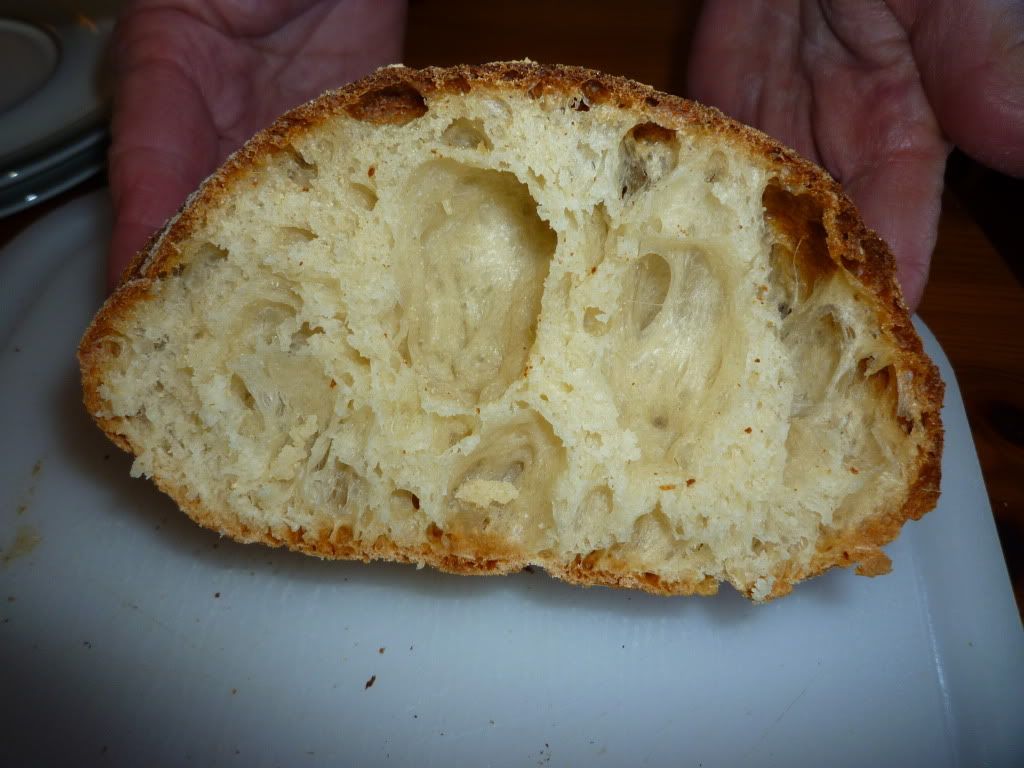
This is a bit of cheat-- it's just over 30% whole wheat, but it's still very healthy and amazing. This is the best whole wheat loaf that has ever come out of my oven-- either here or at my Alma Mater. Unfortunately, I can't take the credit for this one. Servia did each step of the process on her own (her first wild-yeast bread since college and her first bread since I was very young). I simply read the directions out of Tartine Bread and threw out a pointer here or there. But this is her beautiful loaf and it will be my breakfast for the next few mornings.

A detailed explanation of the recipe comes from TX Famer on The Fresh Loaf, whose breads are absolutely stunning (from what I've seen on yeast spotting).
Crust
Crumb

More Crumb [1]


Reinhart says in all of his books that whole wheat needs honey (or other sweetener) because it is too bitter. This is apparently not true, so long as the wheat has a long time to ferment and increase the flavor. The particular loaf does have some white flour in it, but the flavor comes from the whole grain and I think it's absolutely lovely.

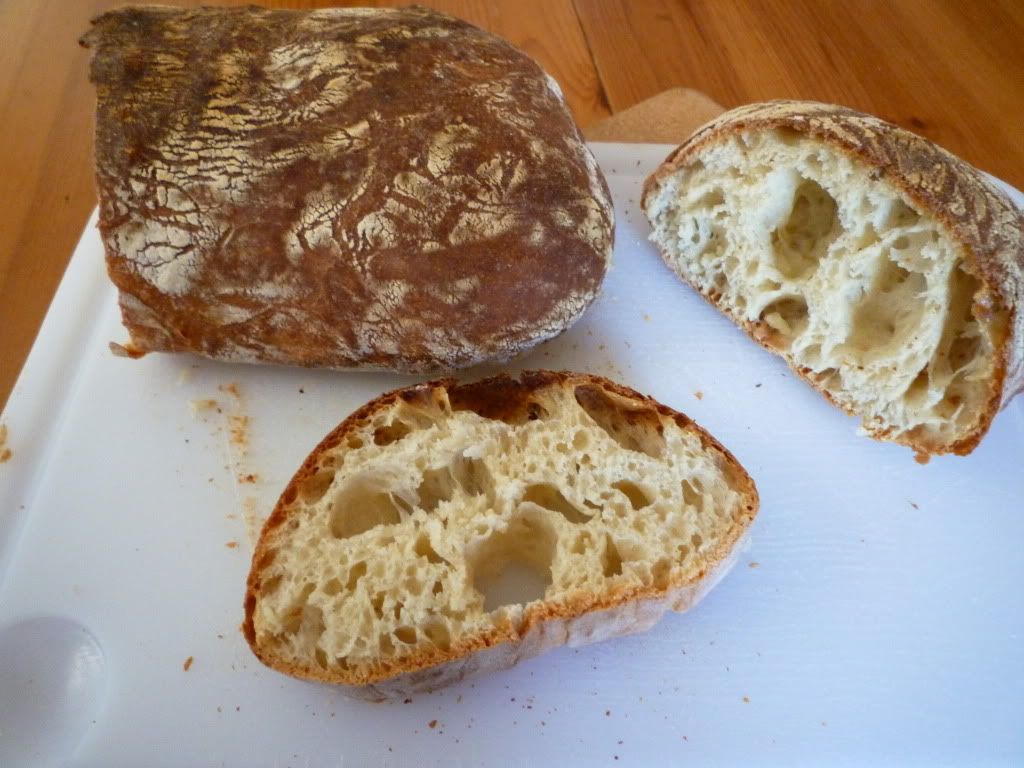
For the white Tartine loaf I am giving to a family friend, I finally managed one semi-decent ear (my scoring technique is getting better!).
Ear! i.e. the protruding slash on the bread.
Gift Loaf.
Gift loaves always make me nervous because I can't check out the crumb first. The loaf is lightweight, though, which should mean that the water cooked out of it. I am hoping my computer-savior likes it!

Endnotes
  1. The bread actually had more air holes than this but it was sliced so thin that it bent in on itself when I tried to lean it up on the other bread.

Saturday, April 2, 2011

Success!

Left this note for my dad when I left for work today.
Tartine Loaf with note

Details forthcoming...

A special thanks to Servia for all of her help.

Tuesday, March 29, 2011

Three Breads in Three Days

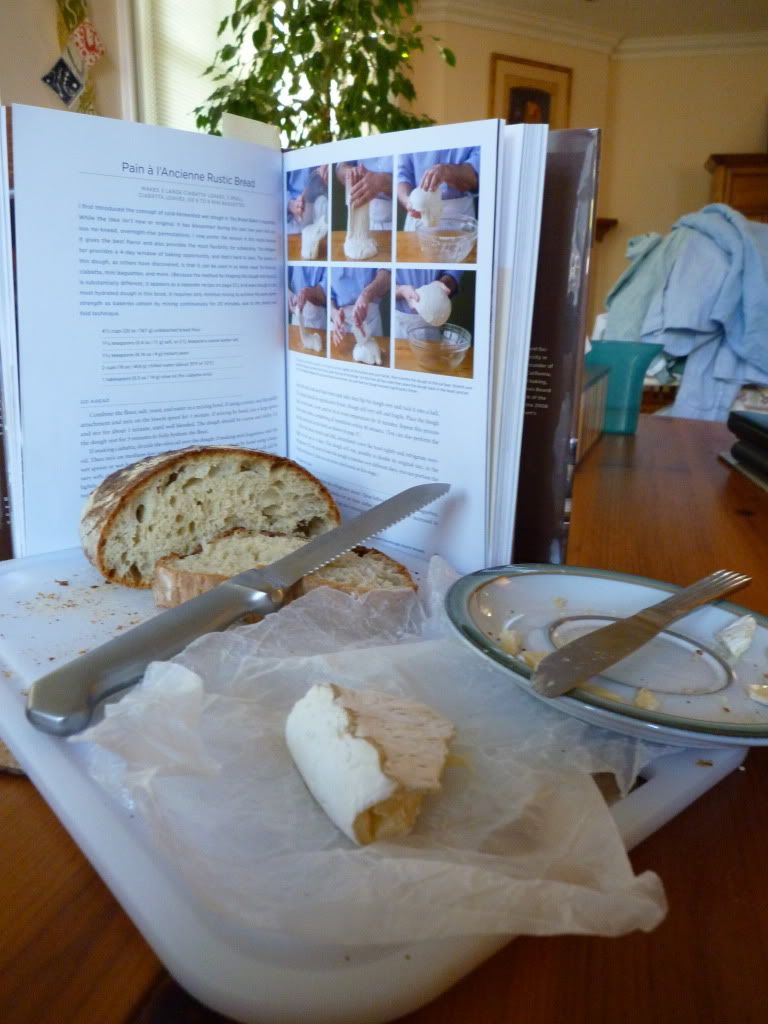
Tartine Bread
Over the past three days I made three different types of bread. Each bread had its own failures and successes. None of them were perfect, but none of them were bad either. They all need work and I learned a lot. Luckily, we had a friend from out of town to help us taste all of the breads.

The first bread to be ready to eat was the More Sour Sourdough from Wild Yeast. As the temperature in my house is not ideal (even though the bread was rising in the oven with a pot of boiling water), I increased each of the rising times by about 1/3 and I chose the refrigerator option for the bread. I made one big mistake that came close to ruining the loaf. I used the "poke test" to try to determine if the bread had risen enough when it came out of the refrigerator. The poke test involves poking a small indentation into the bread with a finger; if the bread rises back up, it's not proofed enough. If it remained indented, it needs to proof longer. Anyway, the bread seemingly failed the poke test so I let it sit out for a few hours. The dough became softer as it warmed to room temperature and it ended up sticking to the banneton in such a way that I had to reshape the dough and let it proof again for a few hours. I think that if I had taken it out of the oven for about 20-30 min and then baked it, the bread would have come out a bit better. As it was, it was a bit dense but pretty nice, especially with brie while warm or toasted with brie in the morning.
Crumb
The crumb is still obviously far too dense, probably from the reshaping with not enough re-rising and not enough steam at the initial part of the bake. I will get it right one of these days. The crust is problematic. Although it is nice and crunchy, it has that serious dappled/multi-colored look too it which indicates that something went wrong. Probably because the dough re-rose. I think this might be the change in temperature from rising in the refrigerator (post being shaped) and then rising again at a warm room temperature.
Crust

The second bread that I made was a 70% finely-ground white whole wheat modified from Bread Cetera's Pain de Campagne. I changed the rising times, increased the hydration slightly (to compensate for the whole wheat) and replaced 70% of the flour with white-whole wheat. I thought this would make a whole wheat version of the exceptional bread i baked all through my senior year at my alma mater. Something did not quite work. The bread was reasonably light, but not as flavorful as I had hoped and it also had the small even air-bubbles of the my version of Peter Reinhart's Whole Wheat Hearth Bread instead of the large irregular holes of my original attempts at Pain de Campagne. I am not sure if this is because it was a 70% whole wheat bread or whether I did something else incorrectly in the process. I may try again with a 50% whole wheat or similar at some point.
Crust
 The crust was nice, but the crumb was just...wrong. I am not sure. I think I might need to add more water and try a different shaping technique. Thoughts will be forthcoming.
Crumb 

The final bread was the crown of the bunch, although not a polished gem by any stretch of the imagination. This was the Country Loaf from Tartine Bread. Once again, this book is absolutely incredible. I finished reading it this weekend in between doing other things and I cannot recommend it highly enough. Anyway, the bread had a few problems in the process of making it, including (I think) adding too much levain, having to leave it longer than intended and changing the temperature during the initial bulk fermentation, and extreme trouble during the shaping process. Worst, I don't have a combo cooker, so I improvised with my stone and an upside-down angel cake pan. The angel cake pan was not nearly large enough, as it turns out, for the way the dough wanted to oven spring, and obviously hampered the oven spring. On the other hand, the dough was moist and flavorful and the crust was wonderful and crunchy.
Crust
Crumb
The crumb has lovely irregular holes, but obviously the bread did not have enough oven spring (because of my faux-pas with the cake-pan), but I can see the potential for this bread. I am very excited. I think this bread is going to be my new wonderful go-to artisan loaf. I found that I have a large broth pot that can be overturned and put in the oven which should allow for enough room for the bread to expand while I look for a good and cheap combo cooker.

In the process of making this bread, I realized that part of the reason that my breads have such uneven oven spring is that they really are not getting enough steam. The home oven is meant to vent steam and it's good at it. My oven at my alma mater was designed to vent steam, but it was really awful at it, which meant that the bread could be steamed much better in that oven than my home oven (hence some of the problem with early loaves). So, except for baguettes and pizza, I will now try the upside-down broth-pot method over my stone to see if I can accomplish better steaming. Results forthcoming.

One other thing I realized making this bread is that my approach to bread baking is not very systematic. At school, things worked about 80% of the time by either fluke or beginner's luck and so I just kept trying new things. When I was having trouble shaping the Tartine Country Bread, I complained that I needed a baker to hang around in our kitchen for the day and help troubleshoot, or at least someone who made successful bread. My mom mentioned that a number of her friends could make one great loaf, but that's all they did. She reminded me that most people perfect a loaf and stick with it. I have never done this. So, my new approach will be to perfect one loaf at a time, starting with the Tartine Loaf (while making the amazingly successful pizza dough in between). When I have perfected the loaf, I will move on. Wish me luck!

Sunday, March 20, 2011

Wine Snob: Oregon Pinot Noir

I have always heard that Oregon produces some great Pinot Noirs and have found this to be the case in my own experience. The Stoller 2007 from Oregon's Dundee Hills that I had last night was no exception. However, this Pinot Noir was unusual (at least compared with the small assortment of other Pinots I have tried.

This wine had the odd appearance (although it might have just been our glasses) of looking lighter on the bottom and getting darker toward the top. It was a ruby colored wine. It was a smooth and refreshing wine. Light and refreshing, the wine had notes of fruit, perhaps cherries, and a slight taste of pepper on the finish after it had decanted for about 2 hours. The wine was summery-- something to sip on a summer's day with a nice crusty wheat batard or boule and some cheese.

Sunday, February 27, 2011

Wine Snob: Girls in the Vinyard

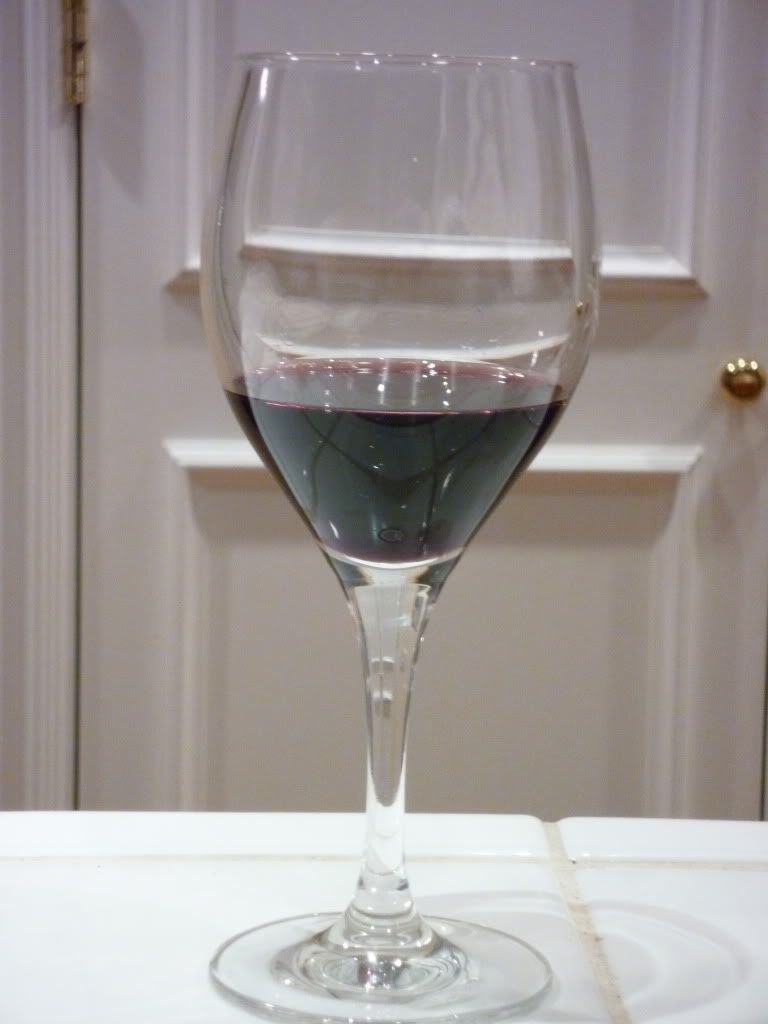
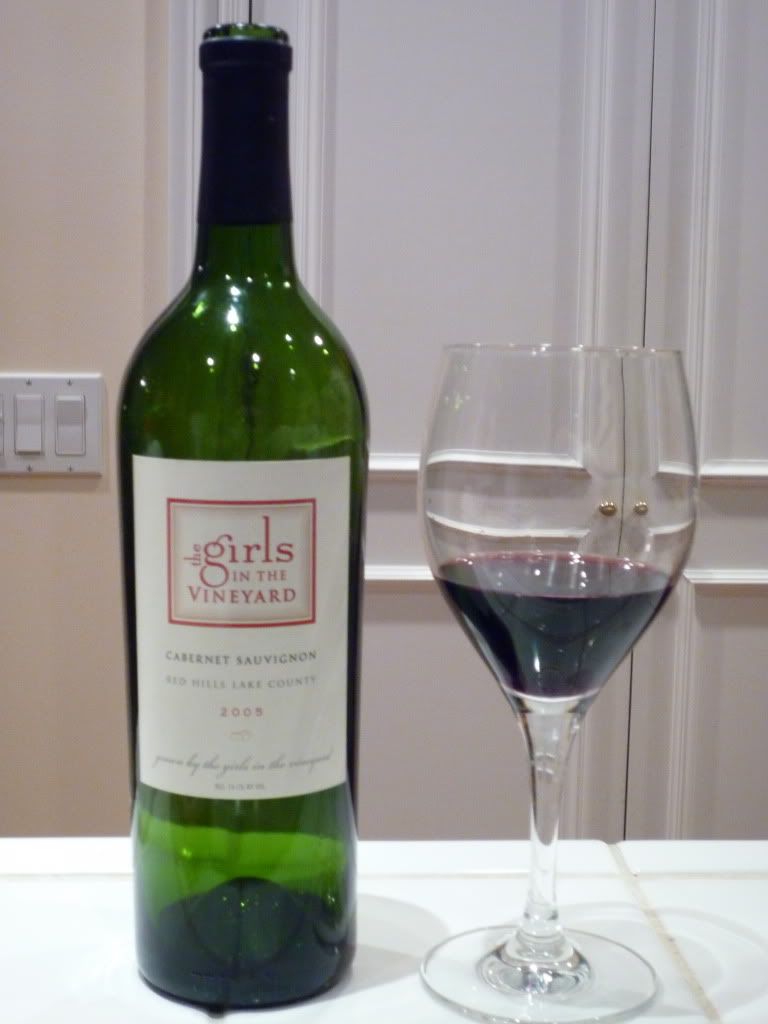
We recently got a shipment from Garagiste. Some of the wines were recent mystery wines which I am very excited to try. The only wine we have tried from the set was not a mystery wine, it was a small vineyard's Cabernet Savignon called "The Girls in the Vineyard." This is the only commercial wine made by a grower named Rob McDonald. The rest of his wine is made out of the small vineyard in his front yard and is made mostly for friends. These grapes come from a vineyard in the lake country and the grapes are sustainably farmed. The "girls" are the vines and the name demonstrates the commitment to the grapes. The article from where I got all the information can be found here.
A Glass of Wine
Bottle + Glass
The wine was fabulous. It was a nice, light, Cabernet with a hint of fruitiness and was complex with a spicy and and a crisp and refreshing finish. The wine had an elegant balance to it, perfect by itself or with any food, and without the weight or syropiness of a typical Cabernet. The second day it had a slightly greater array of spices to it making it slightly warm on the tongue. I will updates this with a more detailed description with the next bottle. It has been about a week since I tried it. It can be found here.

Sunday, February 20, 2011

Moderate Success with Pizza Goup and Frankenpatta


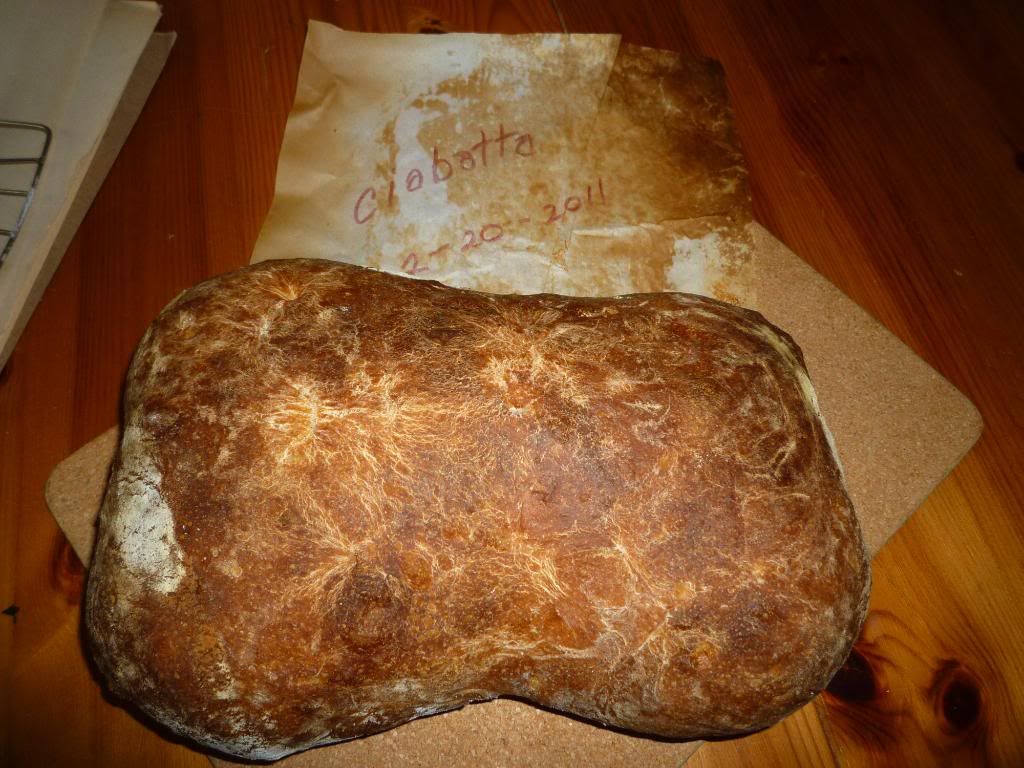
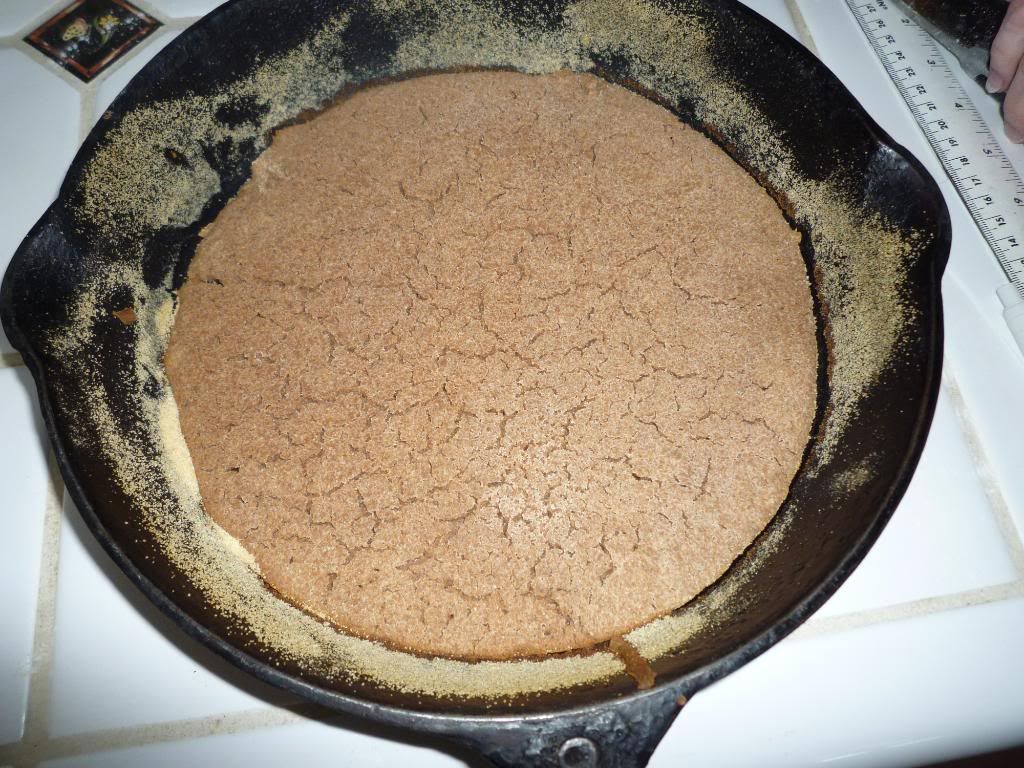
Today (and yesterday's) baking experiment was a learning experience, to be sure. The Reinhart ciabatta turned out well with a few small problems while the Rayner pizza dough turned out poorly with a minor upside. First, the bad news, then the good news.

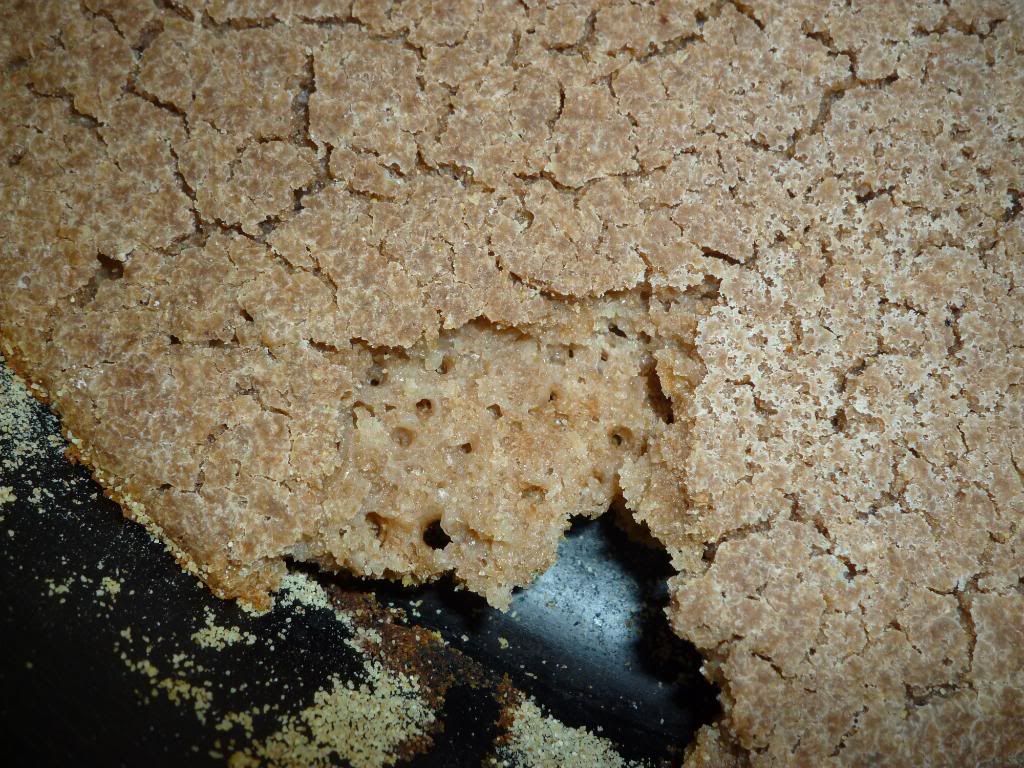
Pizza Goup: Well, no matter what we did, it did not rise. I cooked it anyway. It was flat as a pancake and once it began cracking and looking like the Sahara desert. When I broke it open I was surprised: the bread inside had a light and bubbly crumb (although it was severely underdone because I was afraid to keep it in the oven any longer). I nibbled at the edge, which was cooked. It was actually good! Since I let it sit overnight, it was very sour, but I liked it. I think I might up the salt from 1.8% to 2% if I make it again and I will actually try to make it rise.
Pizza Goup: Out of the oven.
Pizza Goup: the crumb.
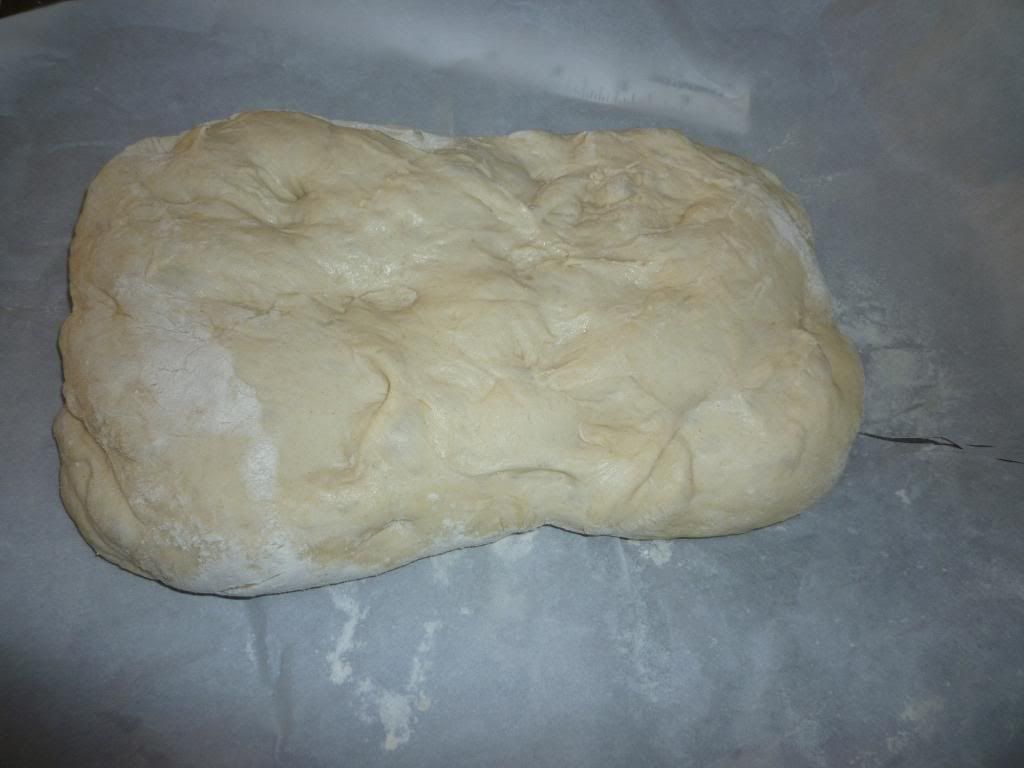
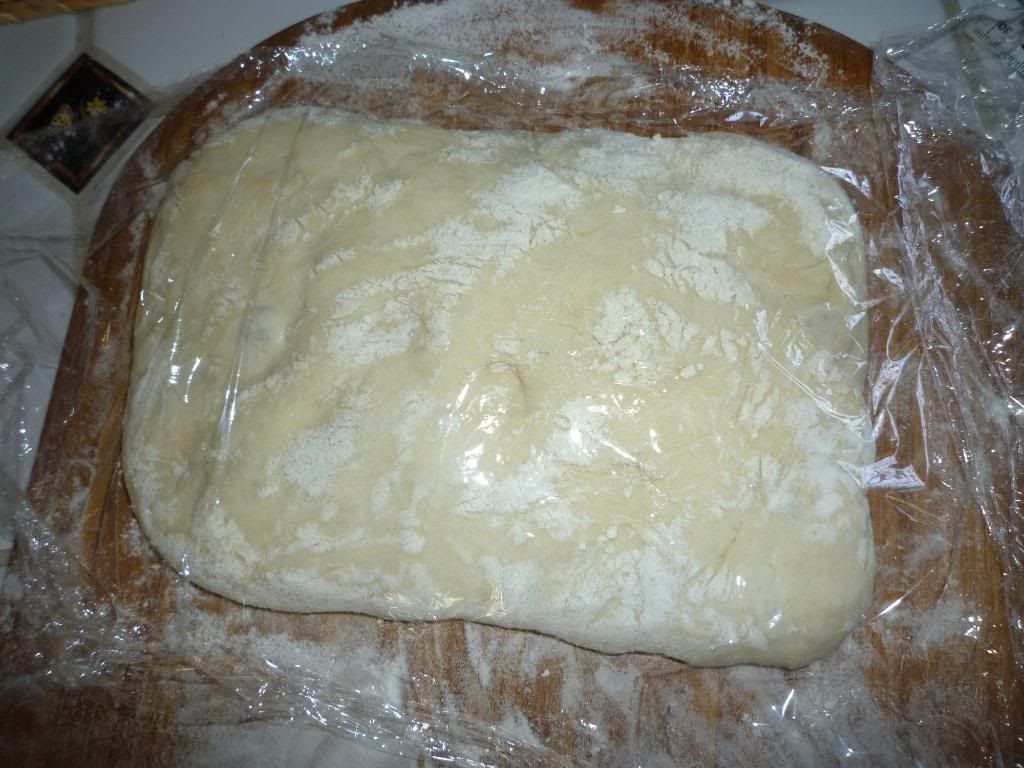
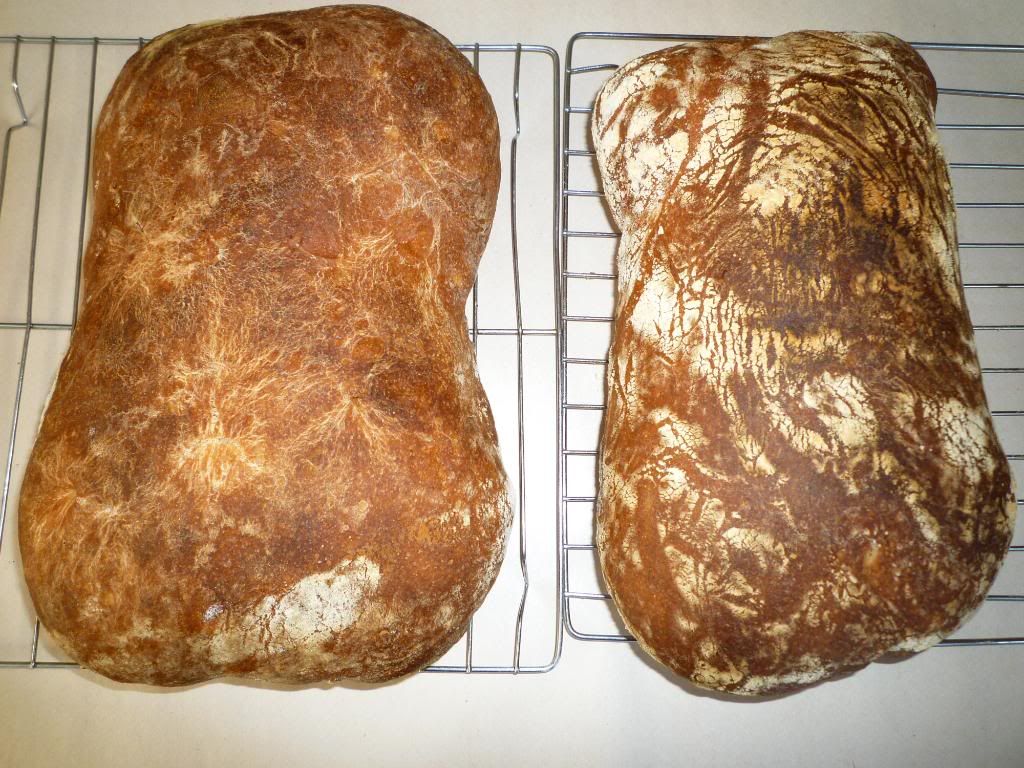
Ciabatta: The ciabatta from Artisan Breads Every Day, despite my hesitation, came out beautifully. I did an experiment: I did one of on parchment paper as Reinhart suggests and placed one of the loaves on the pizza peel in my traditional style. I have decided there is no reason to use the parchment paper except maybe for the first proof. I also realized that every oven is different. At least for my oven, the turning the oven to 525 degrees F (our highest setting) before turning it down to the 450 degrees F baking temperature is a terrible idea (Reinhart 54). The bread had beautiful oven spring, but after the first 12 minutes it almost immediately began to burn. After another few minutes I turned it down to 350 degrees F and
after another minute or too tented the bread with aluminum foil to prevent it from burning further. My suggestion is that if you have an oven like mine (and are using an oven stone) just heat the stone up to 450 degrees F. That being said, the bread still turned out extremely well.
The larger loaf, rising for the 3rd time.
The slightly smaller loaf rising on the pizza peel.
The two loves, out of the oven.
A nice, open, irregular crumb.
Crust and crumb!
The Aftermath.
It was lovely. I ended up eating more of it than I intended so it was lucky that I did not have much lunch. If you can get a hold of the book, this is a recipe I would highly recommend, especially with brie, a creamy soup, or as the bread for a sandwich.

Thursday, February 17, 2011

Wine Snob: Triple Feature

Over the past month, I have tried a few wines from various sources that I have not had a chance to review. None of them compare to the wine I had on Valentine's Day, but the Le Petit Roy was a very nice table wine.

As always, my wine reviews are very inexpert (as I have a rather unsophisticated pallet) and silly (even more so becaquse it has been a while since I had any of these wines) but I enjoy reviewing them anyway. If anyone has tried any of these wines, I would love to compare notes.


The best of the three by a mile was the Jean Roger 2008 Le Petit Roy. This was a French table wine from Garagiste and it made me want to sample more French wines rather than stick to my usual California fare. The wine was a dark red; it was pretty but nothing like the brilliance of the Newlan Cabernet Savignon. The flavor was very earthy and minerally. Overall it was a friendly complex wine with a spicy taste, more like cinnamon than pepper. It paired nicely with the spinach ravioli which was in a very garlic-heavy aurora sauce.

The previous week, we tried the Louis Jadot 2009 Beaujolais-Villages, sent to us by my grandfather. Both the look and the taste were slightly watery. It is a light, smooth wine without much complexity and a slight tannic finish. It would not overpower a light dish, which is nice, but even more than many of the table wines I have tried, it is not a wine that you would want to sip for it's own sake. I think I paired it with chicken piccata and it was a reasonably decent pairing.

The Renegade Winery (which I believe is a false name) 2007 Columbia Valley Reserve Red Wine was one of the Garagiste "mystery wines." These are wines that are sold without their traditional lablings and for less than their usual price because of a glut of grapes. It's a very cute and wonderful idea (especially for someone who wants to expand their palate and cannot or does not want to generally afford most of these wines) and I explained it in more detail in a previous blogpost. Both of the previous mystery wines that I tried-- the Camille and the Script & Seal-- were wonderful. The Rogue did not live up to their standard. I remember it being almost purple in color. It was a wine that's taste could be charted by a linear function: it was light at the start and increased it's flavor until the expansion died with a tannic bite. It was not bad, but it was not spicy or complex (both things I prize in red wine). Servia liked it a lot more than I did. However, we at it with chicken marsala and it complemented the dinner fairly well.
I know this picture is a bit fuzzy, but I thought the back of this bottle was quite amusing.

Tuesday, January 18, 2011

Season 1 Review: Downton Abbey

A few days ago my family finished watching Downton Abbey, a series for which I provided a short midpoint-review. The series focuses on the servants at a manor, Downton Abbey, and the "upstairs family." The family consists of Lord Grantham, a man trying to keep the peace and arrange the future of his rather dramatic house, his three daughters, and his unconventional American wife, Cora. His estate is entailed to the next male in the line, which happens to be a distant cousin-- a middle class lawyer named Matthew Crawly-- who Lord Gratham must train to be the next heir as his mother and Cora band together to try to fight the entail.
Masterpiece Classic: Downton Abbey
The story is slow, but charming, and provides wonderfully three-dimensional characters as well as unexpected twists and turns. The serving staff provides a wonderful foil and contrast to the family above and the moments of interaction between the two groups shows the class divisions and tensions in pre-World War I England.

The series was charming, especially from the third episode on. The one disappointment was that they left the story extremely open ended. However, it appears they are preparing for a second season. I highly recommend the series and hope that the sequel is equally engaging.

Update 02/02/11: I re-watched the series with Cerinthus while I was at my Alma Mater, and he really enjoyed it as well.